Measuring in 3D: Structure Dimensions and Distances Between Layers
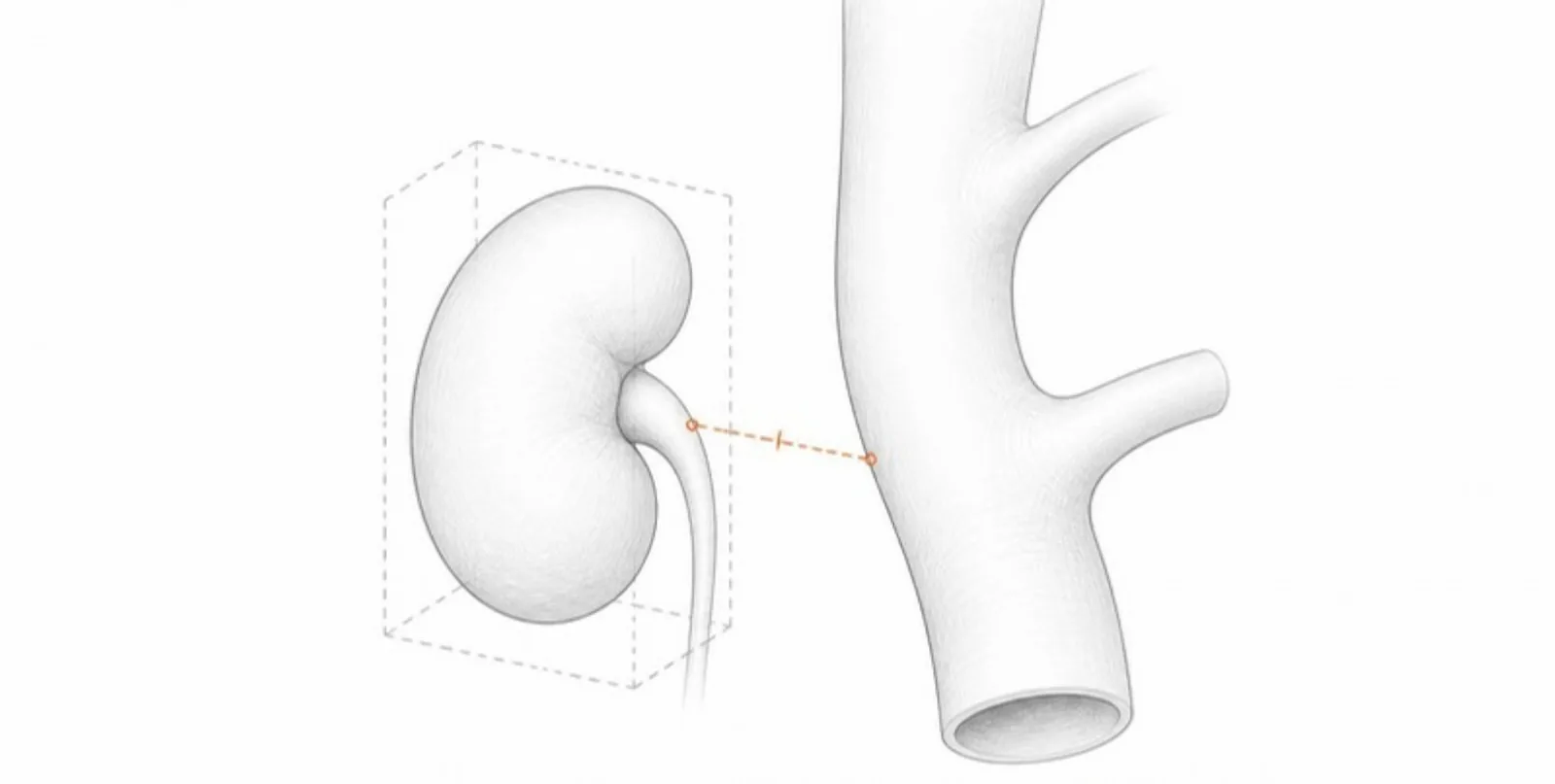
“How big is it?” and “How close is it to that?” are among the first questions a reader asks about a 3D structure. In a static figure the answer is a number in the caption. In AcademicAR, layered models carry their own measurements, so readers can see the numbers in context.
What is measured
When a model has multiple layers — structures from a segmentation, presets from a CT, or parts of a CAD assembly — the worker computes, for each layer:
- Oriented dimensions: the three edge lengths of the tightest box around the structure, aligned with the structure itself rather than the scanner axes. This gives a meaningful length, width, and depth even for an oblique organ.
- Maximum diameter: the largest distance between any two points of the structure — the familiar “longest axis” measure.
And between structures:
- Minimum distance between neighbouring layers, with the two closest points marked in the viewer. Pairs further than about 5 cm apart are skipped, so the list stays focused on relationships that matter.
Values are reported in millimetres, computed from the full-resolution geometry before compression. Layer measurements are included in the paid model plans (pricing).
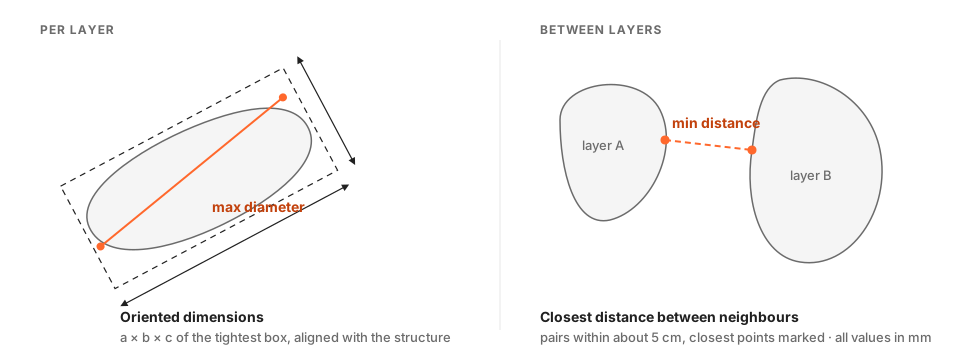 What is measured per layer and between neighbouring layers.
Why this matters in medicine
- Tumour-to-vessel distance is central to resectability discussions; showing it on an interactive model makes the spatial relationship obvious.
- Organ and lesion dimensions support case reports and teaching cases.
- Anatomical variation studies can present the measured structure and the number together.
And in engineering and the sciences
- Clearances in assemblies: the minimum distance between two parts is a clearance check readers can inspect.
- Morphometrics in biology, palaeontology, and archaeology: oriented dimensions and maximum diameter are standard descriptors of specimens.
You stay in control
Measurements depend on the model’s scale, so check units after upload; if you rescale the model, its measurements are recomputed. The owner can also hide the measurements from public viewers — useful when numbers are preliminary or when the model is meant for orientation rather than quantification.
For precise point-to-point checks at a specific level, combine these with the snapping measure in the slice view.
Publish a layered model and let readers see the numbers in 3D.